



PPFD and DLI for LED grow lights are two of the most important metrics in controlled environment agriculture, and understanding how they work is essential for achieving consistent yields, strong plant morphology, and energy-efficient indoor cultivation. Whether you grow strains, leafy greens, or specialty crops, understanding PPFD (Photosynthetic Photon Flux Density) and DLI (Daily Light Integral) is essential for achieving consistent yields, strong plant morphology, and efficient energy use.
A Complete Guide to PPFD and DLI for LED Grow Lights in Commercial Cultivation
This guide explains how PPFD and DLI work, why they matter, and how commercial facilities use them to design predictable lighting protocols. If you want to explore lighting hardware options, see our full overview here: Commercial Lighting Systems Overview.
What Is PPFD?
PPFD measures the number of usable photons (in the 400–700 nm PAR range) reaching one square meter of canopy per second. It represents the instantaneous light intensity that plants receive, and it directly influences photosynthesis.
Why PPFD Matters
PPFD determines how fast and how efficiently plants can process light energy. Proper PPFD ensures the canopy receives enough photons to drive photosynthesis without causing light stress or waste.
- Determines photosynthetic rate
- Controls metabolism and morphology
- Affects nutrient uptake and CO₂ utilization
- Defines how close fixtures can be placed to plants
- Directly correlates to yield potential
Higher PPFD generally means higher biomass and more flower production—up to the plant’s genetic limit. However, PPFD without proper CO₂ and nutrition will not deliver optimal results.
Recommended PPFD Levels for Each Growth Stage
Different cultivation phases require different light intensities. Below are industry-accepted PPFD ranges for strains and other high-value crops:
- Clone: 80–150 µmol/m²/s
- Veg: 300–600 µmol/m²/s
- Early Flower: 600–800 µmol/m²/s
- Mid Flower: 800–1000 µmol/m²/s
- Late Flower: 1000–1200+ µmol/m²/s (strain-dependent)
Maintaining consistent PPFD across the canopy ensures even growth and maximizes yield potential. Uneven PPFD is one of the main reasons facilities get inconsistent harvest weights between tables or zones inside the same room.
Uniformity: The Hidden Key to Yield Consistency
Commercial facilities often focus on maximum output but overlook uniformity—the evenness of PPFD across the entire canopy. Even if the center PPFD is high, poor edge and corner performance can cause:
- Uneven flower development
- Inconsistent terpene production
- Delayed ripening
- Lower total grams per square foot
A properly designed lighting layout aims for uniformity ratios of 0.85 or higher, meaning the lowest PPFD reading is at least 85% of the highest reading. Uniformity is a major differentiator between professional lighting systems and low-cost fixtures.
For a full explanation of uniform lighting and advanced fixture layouts, see our primary guide: LED Lighting Optimization for Commercial Cultivation.
What Is DLI?
DLI (Daily Light Integral) measures how many usable photons reach the plant over the course of a full day. While PPFD is a snapshot in time, DLI represents the total amount of light the plant receives.
DLI is calculated using this formula:
DLI = PPFD × photoperiod (seconds per day) / 1,000,000
Indoor growers can precisely control DLI through dimming, fixture distance, and photoperiod scheduling—creating repeatable crop cycles and predictable harvests.
Recommended DLI Levels
- Clone: 5–10 mol/day
- Veg: 12–18 mol/day
- Flower: 30–45 mol/day
Strains are capable of extremely high DLI absorption, which is why modern facilities push PPFD higher than ever before while balancing CO₂ and environmental controls.
How PPFD & DLI Work Together
High PPFD alone does not guarantee success unless the DLI is balanced. For example:
- If PPFD is high but photoperiod is too short → underexposure
- If PPFD is too low but photoperiod is too long → stretching and weak structure
- If PPFD is too high without CO₂ → photoinhibition and stress
Optimal results occur when PPFD, DLI, CO₂, airflow, and nutrition are aligned. Commercial cultivation requires carefully balancing all of these metrics to create smooth, predictable growth progression.
Advanced Interactions Between PPFD, DLI, CO₂ & Nutrient Uptake
As PPFD increases, plants accelerate their photosynthetic activity. This naturally increases demand for CO₂, water, and nutrients. In commercial rooms, this relationship becomes the core of crop steering.
- Higher PPFD → faster photosynthesis
- Faster photosynthesis → higher CO₂ and nutrient demand
- Higher metabolic rate → more aggressive root-zone dynamics
When PPFD rises without sufficient CO₂ supplementation, the photosynthetic rate plateaus and stress markers begin to appear—even at PPFD levels that should be safe on paper. Many growers running 900–1200 µmol/m²/s supplement CO₂ to 900–1500 ppm to maintain efficiency.
How Fixture Distance Influences PPFD & Plant Structure
The mounting height of lighting fixtures dramatically affects both PPFD levels and uniformity. Hanging fixtures too high wastes photons and weakens lower-canopy development. Hanging them too low risks localized hotspots and leaf stress.
General guidelines:
- Veg rooms: 12–18 inches above the canopy
- Flower rooms: 6–14 inches, depending on lensing and bar spacing
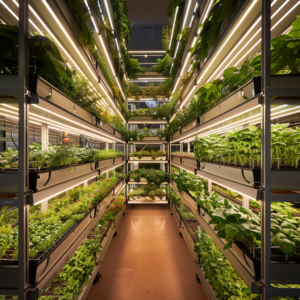
Lower mounting heights produce a softer, more uniform photon footprint—ideal for dense commercial canopies and vertical farming environments.
Why Under-Canopy Lighting Is Becoming Standard
As canopies become denser, upper leaves block photons from reaching interior and lower bud sites. This often results in:
- Popcorn buds
- Inconsistent maturation
- Reduced bag appeal
- Lower overall yield per square foot
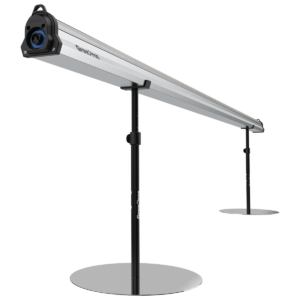
Under-canopy lighting delivers supplemental PPFD directly beneath the canopy, improving bud formation and reducing waste biomass. Many facilities using dedicated under-canopy lighting report:
- 10–20% increase in harvest weight
- More uniform flower size across the plant
- Improved terpene consistency from top to bottom
How PPFD Mapping Reveals Hidden Inefficiencies
A professional PPFD map identifies uneven photon distribution and helps optimize fixture placement. Mapping allows growers to find:
- Hotspots above safe PPFD levels
- Under-lit corners and edges
- Shadowing from ductwork, fans, and cable trays
- Inefficient bar spacing or fixture orientation
Correcting these issues creates a more predictable production environment and higher cumulative yields without increasing total wattage.
Using DLI Scheduling for Controlled Growth
Advanced cultivators adjust dimming curves throughout the day to mimic natural sunlight patterns. This approach stabilizes transpiration rates and improves plant stress management. A typical schedule includes:
- Soft ramp-up in the morning
- Peak PPFD during midday
- Smooth ramp-down in the evening
This reduces light shock, especially during the transition from veg to flower, and helps keep VPD and leaf temperature more stable throughout the cycle.
Building a Complete PPFD Strategy
An effective PPFD strategy combines several factors into one unified plan:
- Lighting selection and fixture efficiency
- Mounting height and layout spacing
- Room climate and airflow patterns
- CO₂ supplementation levels
- Nutrient program alignment with light intensity
- Use of under-canopy lighting when necessary
When these components work together, plants can perform at their genetic ceiling with fewer surprises between harvests.
Conclusion
PPFD and DLI form the foundation of modern commercial cultivation. Understanding how these metrics interact with CO₂, nutrition, airflow, and canopy architecture allows growers to build more productive and efficient growing environments. Facilities that optimize light intensity and uniformity consistently achieve higher yields, better quality, and more predictable harvest cycles.
For additional lighting strategies and hardware recommendations, explore our main lighting framework: LED Lighting System Overview. Grow Pros Solutions also provides mapping services, lighting design support, and rebate assistance to help commercial growers maximize performance from their lighting systems.